The problem
A girl who is in pain, worried or ashamed often has no one to ask. She also does not know when she should see a professional.
The answer
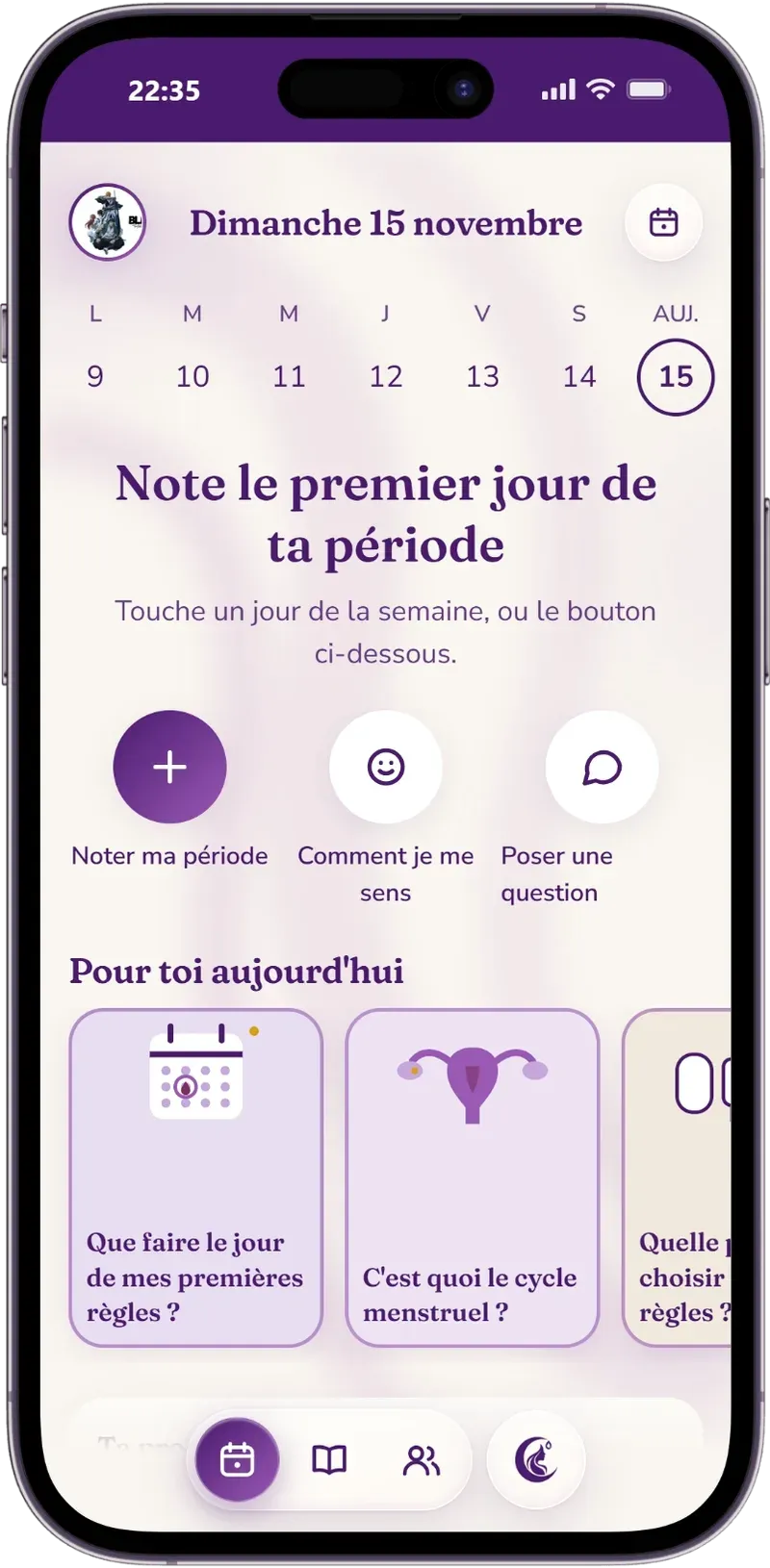
- A calendar that estimates the next period, without ever presenting it as certain
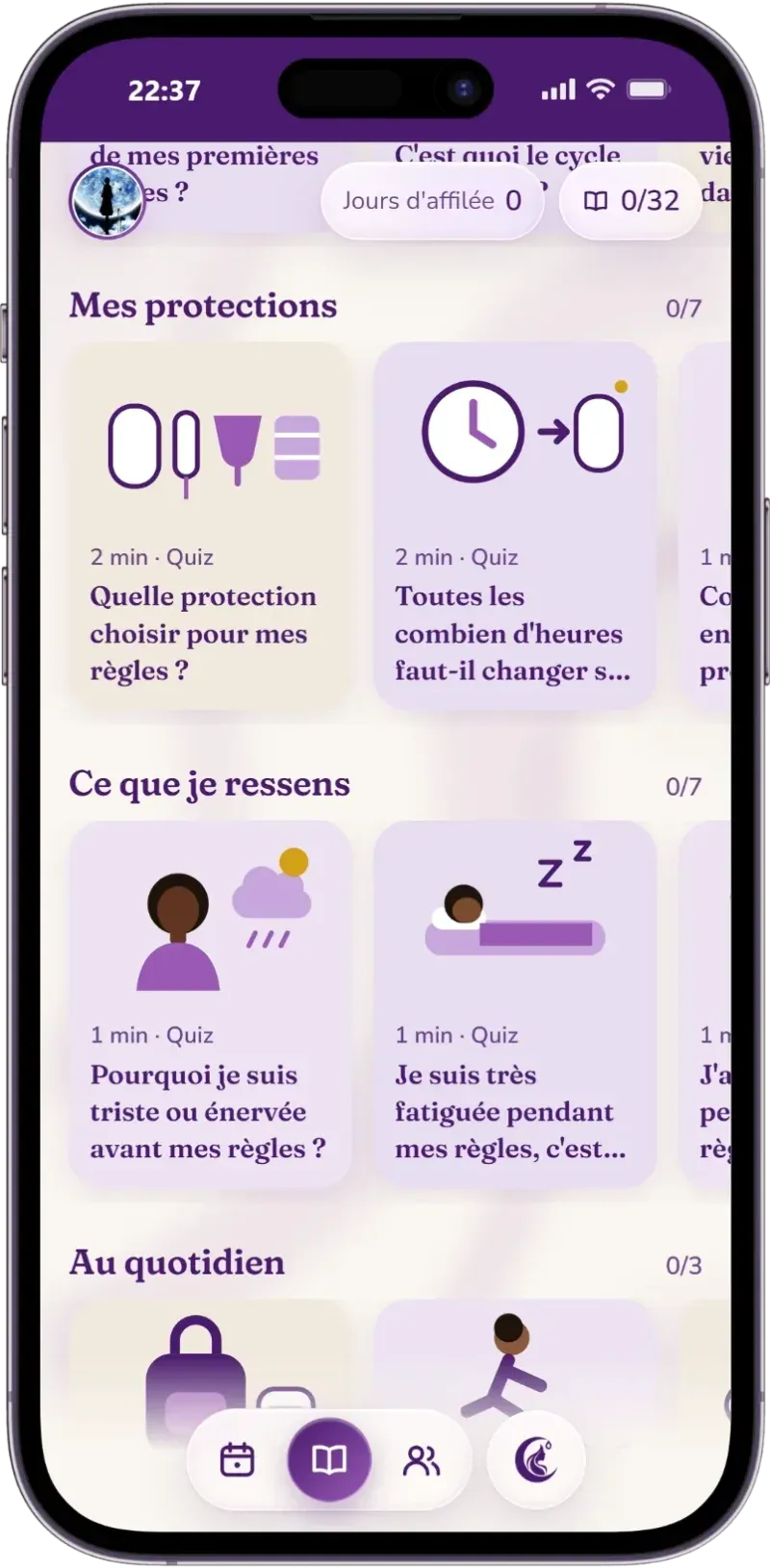
- 32 lessons of two to three minutes, each with its quiz
- An assistant that answers in plain language from sheets written in advance, and cites its sources
- A map of pharmacies, clinics and hospitals nearby
One principle holds the whole product: LUNA never makes a diagnosis. Medical alerts are fixed messages, written in advance, and the app points to a health professional.
The decisions that matter
- An intimate topic on a phone that family members sometimes see. Stateless server, no trackers, history kept on the device, ephemeral chat, a lock using the phone's fingerprint, a quick exit. Notifications never name the topic.
- An AI that must never diagnose. Twelve risk situations are detected by rules and receive a fixed message, written in advance. Generated text can be wrong; an alert message must never be. Other messages still have to be written with a health professional.
- Answers grounded in reviewed content, without a database. Markdown sheets, precomputed embeddings and in-memory search, with a threshold that rejects off-topic questions.
- A map of health facilities that does not give away the location. LUNA serves the map of Togo, the OpenStreetMap places and its fonts itself. Distances are computed on the phone.
- Light and usable offline. What the phone keeps to work without a network fits in 1.44 MB. The map only loads when it is opened: a limited mobile plan does not pay for a screen nobody opens.
- Health content not yet validated. The sheets are marked as drafts. Their review by a health professional is the condition before opening to the public.
The assistant, measured
Evaluation of October 30, 2026 on 20 fictional questions: the share of key facts present in the answer, with and without the sheets.
- of key facts with the sheets
- 87 %
- of key facts without the sheets
- 53 %
Quality
- automated tests (Vitest)
- 1,936
- pull requests merged under checks
- 101
- published versions
- 28
- health facilities on the map
- 963
Figures taken from the repository on November 15, 2026.
My role
In the team of four, I was team lead and in charge of tech and design. One teammate worked on the backend, another on the health content, another on security.
On the code, I mostly moved forward alone, with Claude Code: 233 of the 244 commits were written with it, under written rules and automated checks on every pull request.
The stack
Next.js 16, React 19, strict TypeScript, Tailwind CSS v4. Gemini behind a swappable interface, search over the sheets with embeddings. IndexedDB for on-device data. MapLibre GL and PMTiles for the map. Serwist for offline use. Vitest, ESLint, GitHub Actions, Vercel.
The repository is private and the app is not yet open to the public: a demo is available on request.